
Chattanooga, TN · Garage Door Service
Panel Replacement for Soddy-Daisy's 1980s-Era Doors
Soddy-Daisy homes mostly date to the 1980s, newer stock than much of the Chattanooga area. Here's how that changes panel damage, repair cost, and the fix.
- Repairs & new doors
- Springs & openers
- Serving 8 nearby communities
Time on the Job
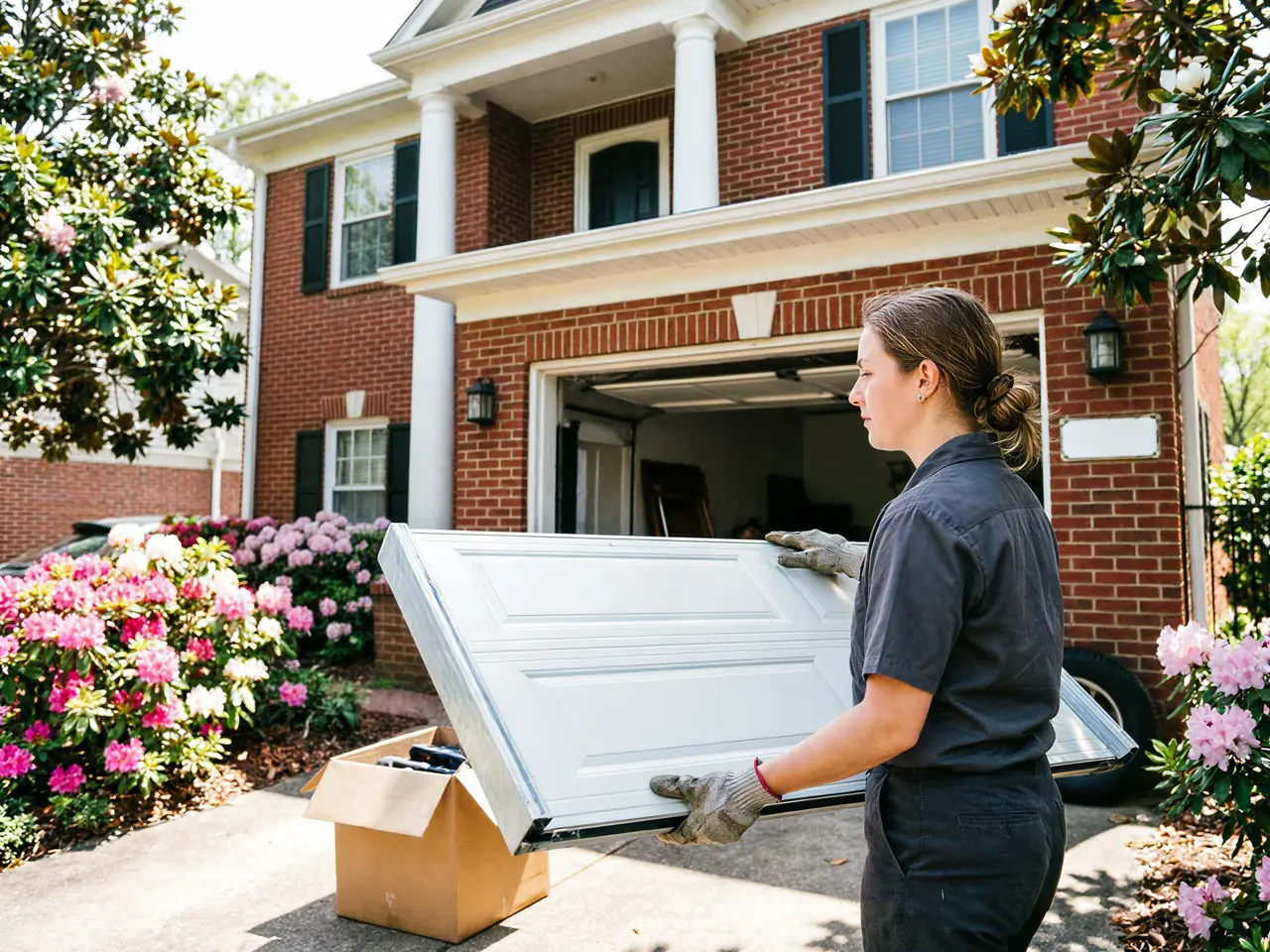
A single panel swap on a sectional door usually runs faster than people expect once the right panel is on the truck. The slow part isn't the wrench work - it's finding a match. Doors built in the mid-1980s, which is the typical build era around Soddy-Daisy, often used roll-formed steel sections in widths and rib patterns that got discontinued or changed by the manufacturer years ago. If your door is a common size and the brand still makes a close match, the panel itself goes in within a couple of hours alongside track and roller checks. If it's an odd width or an older embossed pattern, we spend more time on the phone with suppliers than on the ladder. We tell you upfront which situation you're in before we start, because nobody wants to hear that answer after the old panel is already off the hinges.
What You Are Seeing
Most of what we find on a damaged panel here is dent, crease, or a clean crack along a seam rather than full rust-through. That tracks with the housing stock - Soddy-Daisy's median year built is around 1985, newer than a lot of the surrounding area, so you're looking at steel sectional doors rather than the older wood or one-piece slab styles. A bowed bottom panel is usually a car bumper or a trailer tongue. A crease across the middle section, especially on the side that catches wind, is often cold-weather stress on steel that was never foam-backed to begin with - common on doors from that build era before insulated cores became standard. If the damage is only cosmetic and the panel still seals and tracks straight, replacing just that section is enough. If the frame around it is bent, the fix gets bigger.
Doing It Yourself
Swapping a single panel looks simple on paper: unbolt the end hinges, slide the section out, slide the new one in. In practice, the hinges carry spring tension through the whole door, and loosening the wrong one on a door this age - where the galvanizing may be worn thin and the fasteners have been sitting for close to forty years - can let a section drop faster than you can react. We're honest that a top or bottom panel swap on a door with working springs and no track damage is within reach for someone comfortable with hand tools and a second set of hands. Anything involving a bent track, a panel near the spring assembly, or hardware that won't turn loose without force - that's where we'd rather you call than improvise. A stripped bolt on steel this old often means we're drilling it out anyway.
How We Fix It
We come out from Chattanooga, about 14 miles in, so we build the visit to confirm the door's measurements and section style before we commit to a panel order - that one trip saves a second one later. Once we've got the right match, the job is straightforward: pull the damaged section, check the track and rollers it was riding on for wear from the same impact, reset the hinges, and run the door through a full open-close cycle before we leave. If the panel came from a door old enough that an exact color or embossing match isn't available, we tell you that before ordering so the mismatch isn't a surprise. We don't replace a whole door over one bad panel unless the frame or opener hardware is compromised too - that's a different job and a different conversation.
What Causes It Around Here
The area sits in a cold, moderate climate band, and steel panels take the brunt of that over a winter - expansion and contraction along seams, plus the freeze-thaw cycling that finds any existing dent and turns it into a crack by spring. Houses here mostly went up in the 1980s and 90s, a building boom that used thinner-gauge steel and less insulation than doors made in the last fifteen years, so the panels flex more under impact and cold than a newer insulated door would. With close to 5,200 households in Soddy-Daisy, a good share of them carrying doors from that same era, panel fatigue from age combines with the seasonal swing to make cracked seams and bowed bottom sections one of the more common calls we get out this way.
Frequently asked questions
Is it cheaper to replace one panel or the whole door?
For a single damaged section on an otherwise sound door, replacing just that panel is almost always the lower-cost route. Given the median income here runs a bit above the broader service area, that math usually still favors the single-panel fix unless the track, frame, or opener are also damaged - at that point a full door starts making more financial sense.
Will the new panel match the rest of my door?
If your door is a common size and current brand, usually yes. Doors from the 1980s building era sometimes used patterns or colors the manufacturer no longer makes, so we check this before ordering and tell you honestly if an exact match isn't available.
How long does a panel swap take once you're on site?
On a standard sectional door with a matched panel in stock, the hinge, track, and roller work usually wraps up in a couple of hours. Doors needing a special-order panel take longer because of lead time on the part, not the labor itself.
Do you carry panels on the truck for older doors?
Not for every style. Common current panels, yes. For doors built decades back with discontinued patterns, we confirm the match and order before the repair visit so we're not guessing on site.
More garage door services in Soddy Daisy
Book garage door service in Chattanooga
Call now or request a quote - tell us what the door is doing and where you are.