
Chattanooga, TN · Garage Door Service
What Chattanooga's Housing and Winters Mean for Your Garage Door
A straight look at what drives garage door repair costs in Chattanooga, how the area's 1963-2004 housing stock and cold winters affect springs and openers, and when to call.
- Repairs & new doors
- Springs & openers
- Serving 8 nearby communities
What You Pay
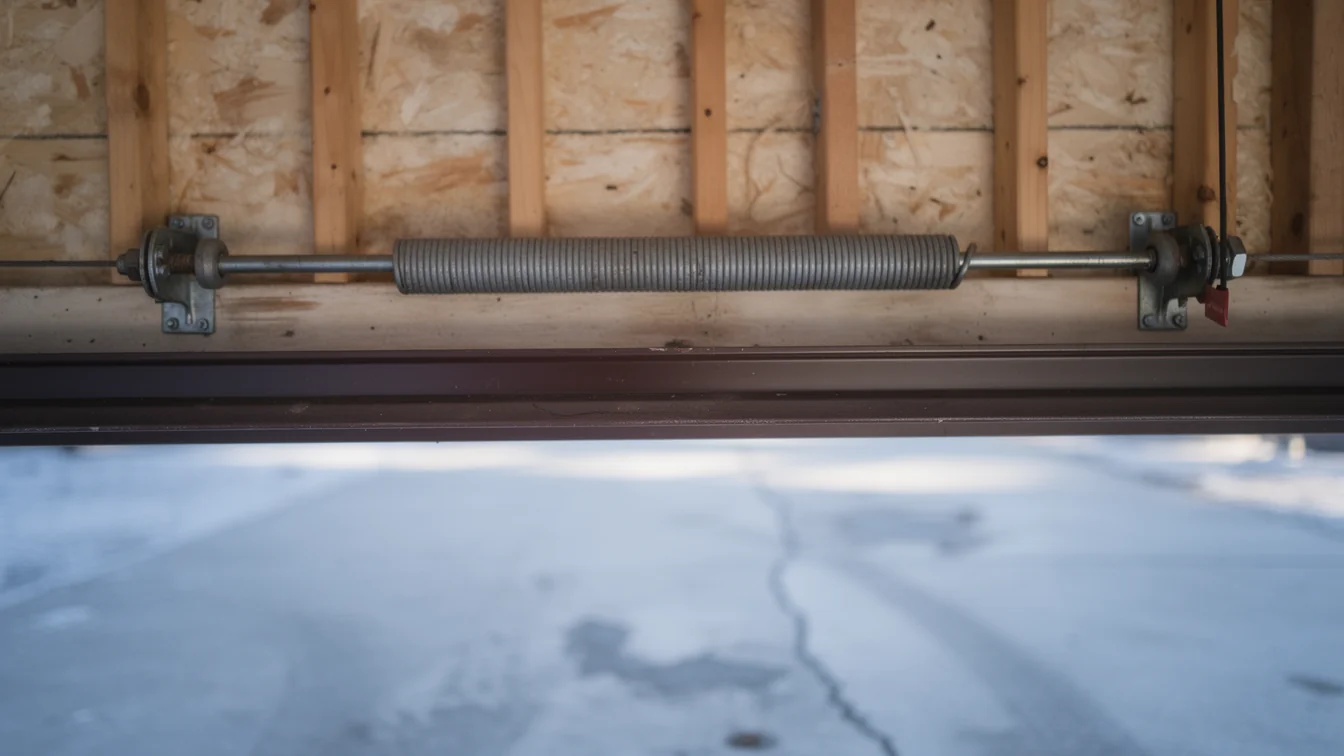
We don't have a flat number to hand you, and anyone who gives you one before seeing the door is guessing. What we can tell you is what moves the price up or down in this area. A lot of Chattanooga houses, across the 14 neighborhoods we work in from East Chattanooga to Lookout Valley, were built between 1963 and 2004, with most of that stock dating to the 1960s and 70s. That matters because openers and spring systems from that era often don't match what's sold off the shelf now - a torsion spring sized for a door built in 1971 isn't the same as what goes on a 2004 build, and matching the wrong one strains the opener motor and shortens its life. Replacing a spring is usually cheaper than replacing an opener, and replacing an opener is usually cheaper than a full door swap, so a tech who actually measures your setup before quoting is doing you a favor, not stalling. With median household income in the service area at $66,814, we try to flag early when a repair isn't worth it compared to replacement, rather than let a repair bill creep past what a new setup would cost.
What Local Conditions Do
Chattanooga sits in a cold-moderate climate band, which means winters cold enough to stiffen steel and summers warm enough to swing the metal back the other way every year. That cycle is hard on torsion springs - the coil tightens in the cold and the wire fatigues faster than it would somewhere with a flatter temperature curve year-round. Houses built in the 1960s and 70s, which make up most of the stock here, often still run original or first-replacement springs, since a spring installed decades ago under older sizing standards wasn't built for the cycle count a door sees today. Rollers and hinges on those same doors show it too - nylon rollers crack in cold snaps, and steel rollers from that era rust at the bearing faster once humidity swings back up in spring. None of this is dramatic, it's just wear that shows up earlier in a house built forty or fifty years ago than in a door installed last year, and it's why a lot of our calls in this part of town trace back to hardware that's simply outlasted its intended cycle count.
The Problem
The actual failure point is almost always the same: a torsion spring that's been cycling through a cold-moderate winter on hardware sized for a house built before 1980 finally lets go, usually on the coldest morning of the stretch, because cold steel is brittle steel and that's when the fatigue crack finishes the job. We see it across the older sections of the service area - Glenwood, Stuart Heights, North Chattanooga - where original one-piece doors or early replacements are still running on side-mounted torsion setups that nobody stocks parts for anymore. Newer construction, closer to the 2004 end of the build range, tends to have standard extension or torsion hardware that's easier to match. The honest limitation here: if your door is an older, non-standard size or an obsolete opener model, we may need to order a part rather than carry it on the truck, and that can mean a day or two wait rather than a same-visit fix.
When to Call Someone
Call before the spring fully lets go, not after. If a door that opened fine all summer starts sounding rough, binding partway up, or needs a shove once it's cold, that's the fatigue crack forming, not a one-time fluke. Given how much of the housing in this area dates to the 1963-2004 range, a lot of these calls aren't emergencies yet when the owner first notices the sound, but they will be inside a season. If the door has already dropped and won't move, don't force it with the opener - that strains the motor and can bend the track, turning a spring job into a bigger one. We serve the Chattanooga area including the neighborhoods and nearby towns noted here; if you're not sure whether your symptom is urgent, it's worth a call before it decides for you on a cold morning.
Frequently asked questions
Why do garage door springs seem to break more in winter here?
Chattanooga sits in a cold-moderate climate band, and the swing between cold winters and warm summers fatigues torsion spring steel faster than a flatter climate would. Cold steel is also more brittle, so a spring that's been weakening all year often finishes failing on a cold morning rather than a mild one.
My house was built in the 1970s - does that affect repair cost?
It can. A lot of the housing in this area dates to the 1960s and 70s, and doors from that era often run original or early-replacement hardware sized differently than what's sold today. Matching old sizing correctly sometimes takes more diagnostic time than a newer, standard-size door.
Do you carry parts for older opener models on the truck?
Not always. If your opener or door hardware is an older or non-standard size, we sometimes need to order the part rather than finish the job same-visit. We'd rather tell you that upfront than promise a fix we can't deliver that day.
Is it ever not worth repairing an old door?
Sometimes, yes. If a door built decades ago needs a spring, opener, and track work all at once, the repair bill can approach what a new door costs. We'll point that out rather than string together repairs that don't add up to a good outcome for you.
Related garage door services in Chattanooga
More garage door guides
Book garage door service in Chattanooga
Call now or request a quote - tell us what the door is doing and where you are.