
Chattanooga, TN · Garage Door Service
Panel Replacement for Chattanooga Garage Doors
Dented or cracked panels on Chattanooga garage doors from 1960s-70s stock. See why panel replacement is common here and how we match or replace a full door.
- Repairs & new doors
- Springs & openers
- Serving 8 nearby communities
What Causes It Around Here
A big share of the houses in this service area were built between 1963 and 2004, with the bulk of that stock going up in the 1960s and 70s across the fourteen named communities we cover. Doors from that era are steel sectional panels on roll-formed track, and after fifty-plus years the panels themselves are usually the first thing to fail, long before the opener or the springs. Steel fatigues at the hinge points, and a panel that's been dented once rarely sits flush again - it bows, it binds on the rollers, and every cycle after that stresses the panel next to it.
Chattanooga sits in a cold-moderate climate band, which means the door goes through real freeze-thaw swings every winter. Moisture gets into a hairline crack in a panel seam, freezes, expands the seam, and by spring that panel is flexing where it shouldn't. On an older door with no insulation layer, that flex transfers straight to the track alignment. We see this pattern most on houses built before the 1980s, where the original panel gauge is thinner than what's sold today - a knock from a bike or a trailer hitch does more damage than it would on a newer door.
What You Are Seeing
The most common call is a single dented or caved-in panel, usually the bottom one, from a backed-up car or a dropped ladder. On its own that's a cosmetic problem until the dent pushes the panel out of its track channel - then you hear the roller grinding or see the door hesitate at that spot every time it runs.
The second pattern is cracking along the panel seams on an older steel door, not from an impact but from age and the freeze-thaw cycling this climate band puts doors through. You'll see rust blooming at the crack first, then the seam opening wider each winter. A third pattern, more common on the oldest doors from the 1960s and 70s stock, is a panel that's simply warped - it still closes, but it bellies out in the middle and won't seal against the weather strip.
If you're only seeing one bad panel and the rest of the door is sound, that's good news: we don't have to touch what isn't broken.
What You Pay
We price panel work by what's actually wrong, not by a flat number over the phone, because the range between a single panel swap and a full-door replacement is wide. A single-panel replacement depends on finding a matching panel - on a door built in the last fifteen to twenty years that's usually straightforward, but on anything from the older 1960s-70s stock in this area, exact matches are often discontinued, and we're ordering a close match or recommending you replace the full door instead of ending up with a visible mismatch.
Labor is a smaller part of the bill than most people expect; the panel itself, especially an insulated one, is usually the bigger line. If more than one panel on a door is damaged, or the door predates reliable manufacturer records, we'll tell you straight when replacing the whole door costs close to what two or three one-off panels would, and is the better call. We don't quote a number without seeing the door - section height, insulation, and whether it's a standard 16-foot double or something older and non-standard all move the price.
How We Fix It
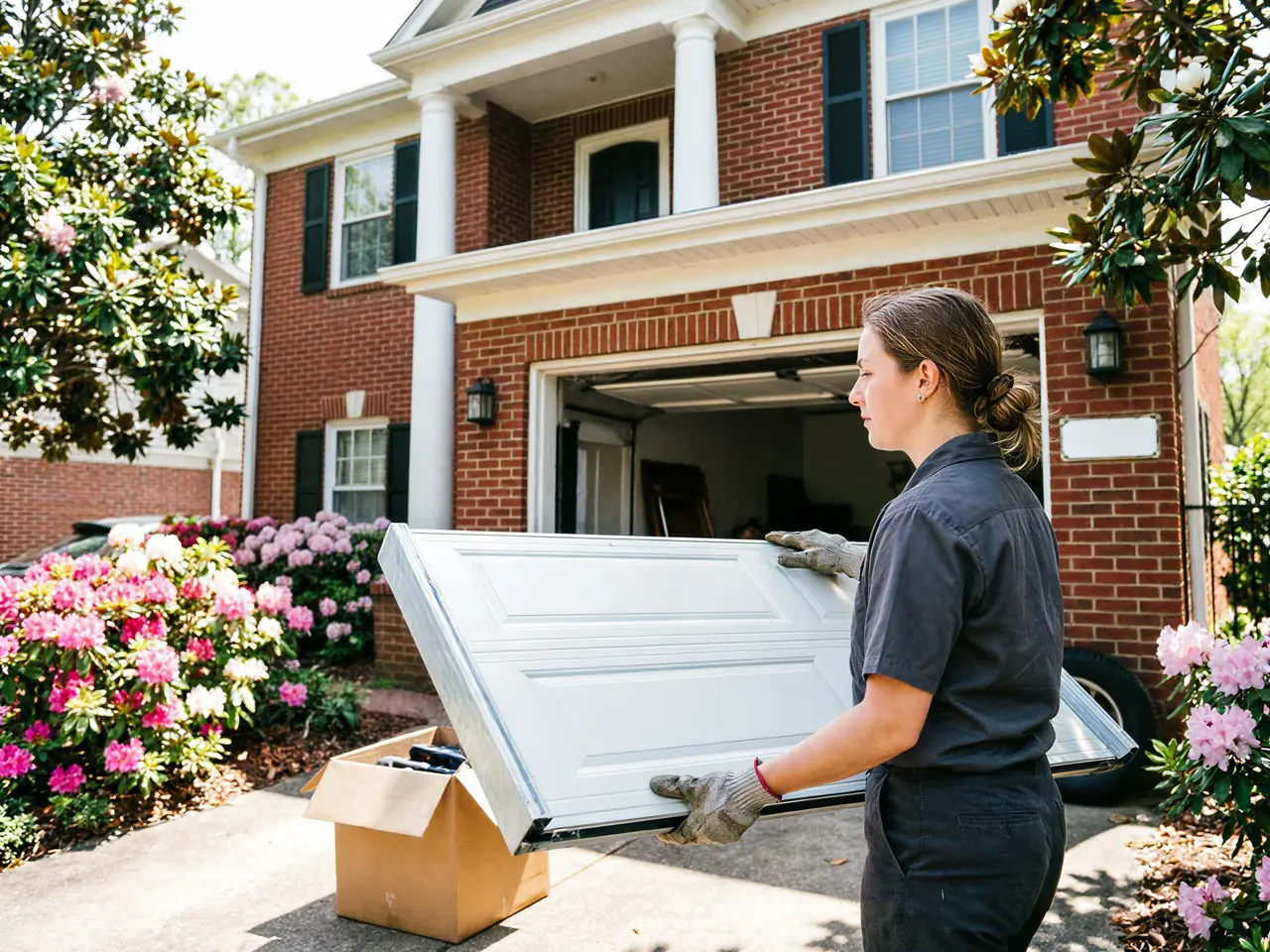
First we confirm it's actually a panel problem and not a track or spring issue masquerading as one - a door that drags can look like a bad panel when the real fault is upstream. Once we've confirmed the panel, we pull the section, check the hinges and rollers it was attached to for wear, and either order a matching replacement panel or, if the door's old enough that matches aren't reliably available, walk you through full-door options.
One honest limit: on doors from the earlier end of that 1960s-70s building wave, exact panel matches can take longer to source than people expect, sometimes longer than the repair itself. We won't install a visibly mismatched panel just to finish the job fast - we'd rather tell you the lead time up front or recommend the full-door swap. Once the panel's in, we re-square the section against its neighbors and run the door through a full cycle before we call it done, because a panel that's slightly out of square will rub and dent again within a year.
Frequently asked questions
Can you match a panel on an older Chattanooga garage door?
Sometimes. On doors from the newer end of our area's 1963-2004 range, matching panels are usually in stock through standard suppliers. On older steel doors from the 1960s and 70s, exact matches are often discontinued, and we'll either source a close match or recommend replacing the full door so it doesn't look patched.
Why did my panel crack without being hit?
In this climate band, moisture works into small seam gaps and freezes through the winter, widening the crack each cycle. It's common on older steel panels that have gone through many freeze-thaw seasons, especially if there's already rust at the seam from age.
Is it cheaper to replace one panel or the whole door?
Depends on the damage and the door's age. One panel on a newer door is usually the cheaper fix. On an older door where matches are hard to find or more than one panel is damaged, a full-door replacement often costs close to the same as patching panel by panel, and looks better.
Will a new panel match the color of my old door?
We do our best to match factory color, but paint fades differently across a door that's been in the Chattanooga sun and weather for decades, so a new panel may look slightly brighter than the rest until it weathers in.
Related services
By Neighborhood
Panel Replacement across the Chattanooga area
We also handle panel replacement in these Chattanooga-area suburbs.
Book garage door service in Chattanooga
Call now or request a quote - tell us what the door is doing and where you are.