
Chattanooga, TN · Garage Door Service
When an Old Door in Chattanooga Is Worth Fixing (And When It Isn't)
A look at when a garage door built during Chattanooga's 1963-2004 housing boom is worth repairing versus replacing, given the area's cold-moderate climate and older hardware.
- Repairs & new doors
- Springs & openers
- Serving 8 nearby communities
What You Pay
We won't quote a number here, because what a repair costs depends on what's actually wrong and what's behind the wall. What we can tell you is what drives the cost in this area specifically. Most of the housing across the service area went up between 1963 and 2004, with the median landing around 1979 - so a good share of the doors we're called out to are original or close to it. Parts for those older torsion setups, especially side-mounted hardware from the 1960s and 70s stock common in neighborhoods like Hixson, Red Bank, and East Ridge, aren't sitting on every supply truck the way current parts are. That can mean a short wait on a specific bracket or drum, which affects timing more than price. A straightforward spring swap on a standard double door is one job. A door where the track, hinges, and opener are all original from the same install forty-some years ago is a different conversation, because fixing one worn part often just exposes the next one. We'll tell you straight if a repair is a patch or a real fix before we start."
What Local Conditions Do
Chattanooga sits in a cold-moderate climate band, which doesn't sound dramatic, but it's exactly the kind of weather that wears a garage door down slowly instead of all at once. Repeated freeze-thaw swings through the winter months work on galvanized torsion springs and steel rollers harder than a climate that stays one temperature most of the year. Metal contracts in the cold and expands as it warms, and a spring that's already fatigued from twenty or thirty years of cycles loses tension faster under that kind of repeated stress. Same goes for nylon rollers and cable ends - the swings make them brittle before they'd otherwise give out. None of this shows up overnight. It shows up as a door that starts sagging on one side, or an opener that strains harder than it used to on cold mornings. Houses built in the 1960s and 70s across this area, which is most of what's out there, are hitting the stretch where that slow wear starts turning into an actual failure - a spring that snaps instead of just squeaking. The climate doesn't cause the breakdown by itself, but it sets the pace.
The Problem
Put the housing age and the climate together and you get a predictable pattern. With median construction landing around 1979 across the service area, a lot of doors are coming up on fifty years of torsion springs doing the same job, in a climate that cycles hot and cold hard enough to fatigue steel faster than a mild one would. Across the 43,198 households in this area, 23,962 are owner-occupied houses - that's the real base of single-family garage doors we're talking about, not apartments or rentals where someone else handles it. A lot of those owners are on the original spring and the original opener, and they don't know it until the door won't lift one morning. The common failure isn't dramatic: a frayed cable, a spring that's lost half its coil tension, a roller that's finally seized in its track. Each one looks minor until the door comes down wrong or won't go up at all. The honest limitation here is that we can't tell from a phone call whether a noise is a ten-minute fix or a sign the whole torsion assembly needs replacing - that call only happens once we've got eyes on the actual hardware.
When to Call Someone
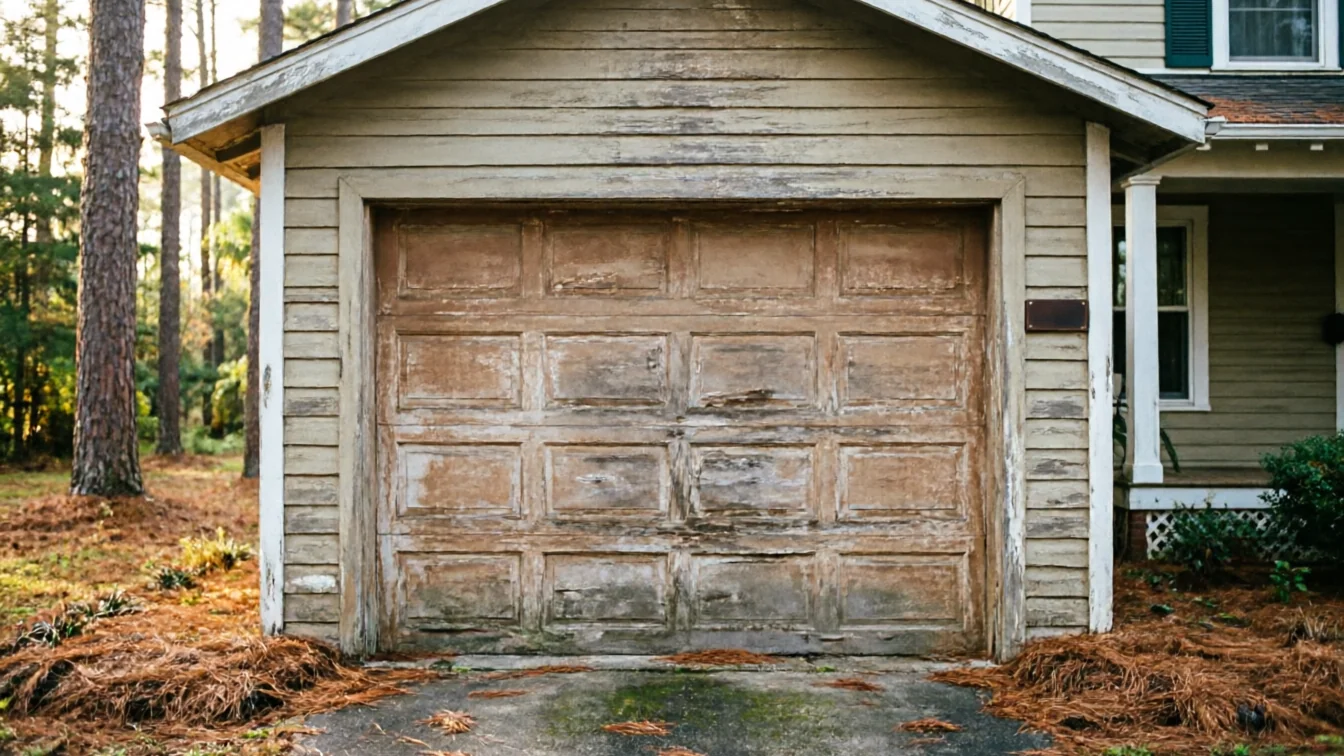
Call before the door fails completely, not after. If a door from the 1960s-70s stock common across areas like Red Bank, Signal Mountain, or Middle Valley is starting to sag on one side, hesitate before opening, or make a grinding sound it didn't make last winter, that's the window where a repair still makes sense. Wait until the spring actually snaps or the cable frays through, and you're often looking at a bigger job because something else gave way trying to compensate. With a median household income of $66,814 across the service area, replacing a door outright is a real decision for most owners here, not a small one, so it's worth knowing which repairs hold and which ones are just delaying the same outcome. A door that's original to a house built decades ago, with an opener that's already been swapped once or twice, is usually still worth fixing if the track and frame are square. It stops being worth it when the frame itself has shifted or rusted through - at that point you're paying to patch something that won't hold the new parts anyway.
Frequently asked questions
How old does a garage door have to be before repair stops making sense?
Age alone doesn't decide it. A door from the 1960s or 70s can still be worth fixing if the track and frame are square and the panel itself isn't rusted through. What matters more is condition than year - we've seen 40-year-old doors worth saving and 15-year-old ones that aren't, usually because of how the frame held up.
Does Chattanooga's weather actually wear out garage door parts faster?
The cold-moderate swings here put real stress on torsion springs and rollers over years of freeze-thaw cycles. It's not a single storm doing the damage - it's decades of contraction and expansion fatiguing metal that's already old. That's a big part of why original hardware from the 1960s-70s housing stock tends to fail around now.
Can you tell me a repair cost over the phone?
Not honestly, no. What it costs depends on what's actually worn and whether parts for an older torsion setup are easy to source. We'd rather look at the door and give you a real number than guess low over the phone and have it change once we're there.
Related garage door services in Chattanooga
More garage door guides
Book garage door service in Chattanooga
Call now or request a quote - tell us what the door is doing and where you are.