
Chattanooga, TN · Garage Door Service
Garage Door Maintenance That Matches Chattanooga's Housing Stock
Garage door maintenance built around Chattanooga's 1960s-2000s housing stock and cold-moderate winters. Tune-ups, spring checks, and track service done right.
- Repairs & new doors
- Springs & openers
- Serving 8 nearby communities
What Causes It Around Here
Most garage doors across this service area went up somewhere between 1963 and 2004, with the median build year sitting around 1979. That one number explains a lot of the calls we get. A door and opener installed in the late 1970s or early 1980s is now pushing forty-five years old, and even a door replaced once since then is usually running on hardware that was never designed for today's heavier insulated panels. Across the fourteen named neighborhoods in this area, the bulk of that stock is still 1960s-70s construction, which means original or first-generation torsion springs, worn-out rollers, and track that was shimmed for a house that has since settled.
Add in a cold-moderate climate band, and you get freeze-thaw cycling that works grease out of bearings and lets condensation sit in cable drums over the winter months. It's not dramatic weather. It's steady, repeated temperature swings on hardware that's already decades past its design life. That combination - old stock, moderate winters, and no scheduled service in between - is why maintenance calls here skew toward springs losing tension and openers straining rather than outright failure on brand-new doors.
What You Are Seeing
The door that used to glide now hesitates a few inches up, or the opener strains and clicks before it catches. You might hear a grinding sound from one side of the track, or notice the door isn't level when it's halfway open - a sign a spring on one side is weaker than the other. On older torsion setups common in this area's 1960s-70s housing, a slow start followed by a sudden jerk upward usually means a spring that's lost coil tension but hasn't broken yet.
Other owners call because the door looks fine but feels heavy when lifted by hand with the opener disconnected - that's the real test of spring health, not how smooth it runs on the opener motor. Rust streaks on the spring coils, flaking on the cable drums, or a track that's pulled slightly away from the frame are all signs of hardware that's been sitting unserviced through a few winters. None of these are emergencies yet. That's exactly the point of maintenance - catching them before the spring snaps or the cable frays under load and the door comes down hard.
What You Pay
We don't post a flat maintenance price because what a door needs depends on its age and what's worn - a five-year-old door with one dry hinge is a different job than a forty-year-old torsion setup that hasn't been touched since it was installed. What we can tell you is that a maintenance visit covers spring tension checks, track alignment, hardware lubrication, cable and roller inspection, and opener force settings - the same checklist regardless of which of the neighborhoods in this service area you're in.
If we find a spring close to failing or a cable showing wear, we'll tell you the cost of that repair before we touch it, separate from the maintenance visit itself. We won't pad a visit with parts a door doesn't need yet, and we'll say plainly when a repair isn't worth it compared to replacing an opener or spring set that's reached the end of its service life.
How We Fix It
A maintenance visit starts with disconnecting the opener and testing the door by hand to see what the springs are actually doing without motor assistance - that catches tension loss the opener otherwise masks. From there we check torsion spring wind and balance, inspect cable drums and the cables themselves for fraying, and run the door through a full cycle checking for binding in the track.
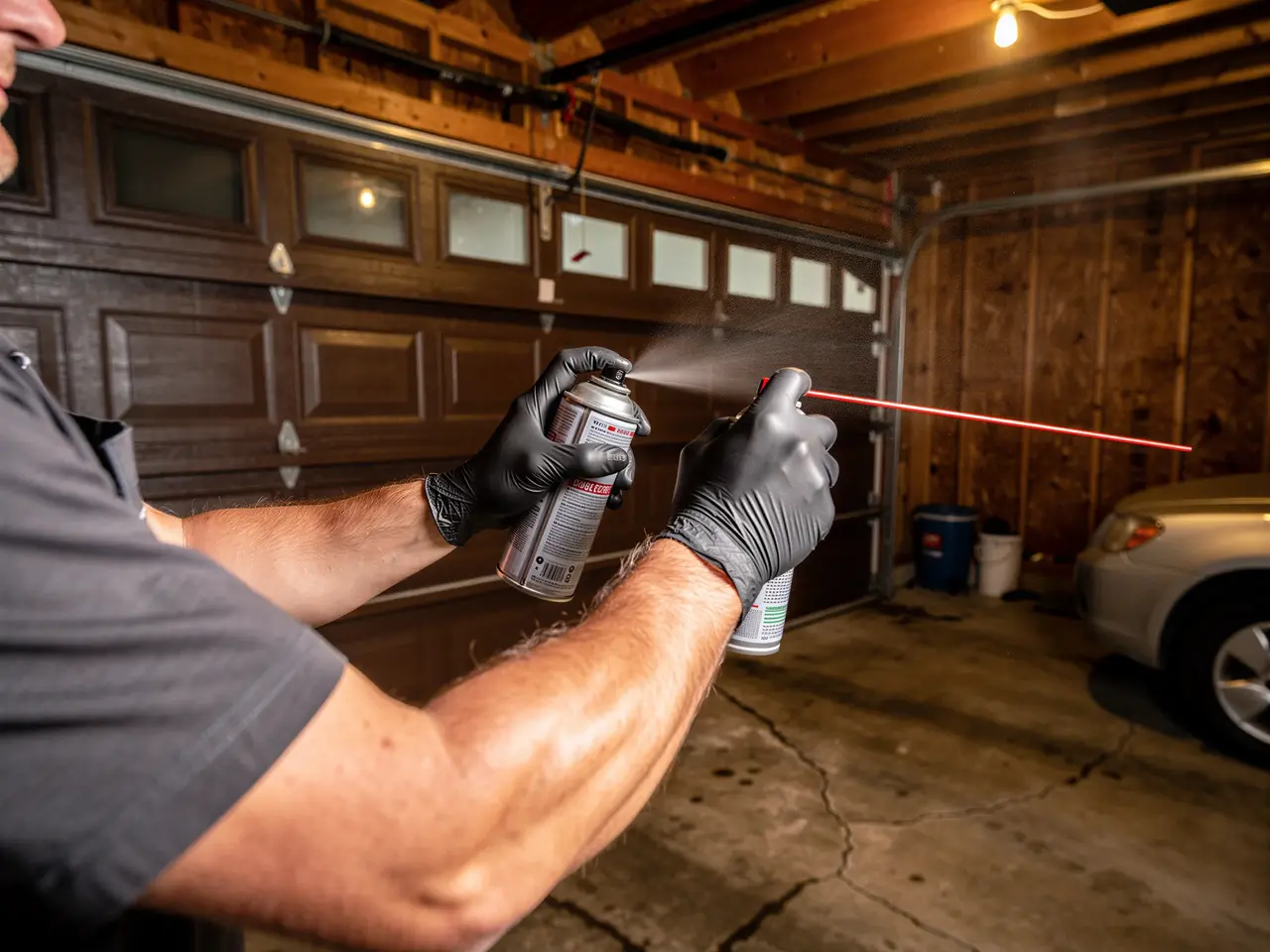
We lubricate rollers, hinges, and the torsion bar with the right grease for the hardware type, not a generic spray that washes out in a season. We check the opener's force and limit settings, since many units in older homes here were set once at install and never adjusted as springs aged and door weight shifted. We tighten loose mounting hardware on the track and header, since settling houses across this area's older stock shift brackets over the years. Anything found during that inspection - a spring near end of life, a cracked panel, a worn cable - gets flagged with a separate quote, not folded into the maintenance visit.
Frequently asked questions
How often should I get my garage door serviced in Chattanooga?
For houses in this area's typical 1960s-2000s stock, once a year is reasonable for most doors. If your door is on the older end of that range or you've noticed any hesitation, noise, or unevenness when it opens, it's worth having it checked sooner rather than waiting for the annual visit.
Can maintenance stop a spring from breaking?
Maintenance catches a spring that's losing tension before it snaps, but it can't extend the life of a spring that's already near the end of its cycle count. If we find one close to failing during a visit, we'll tell you so you can replace it on your schedule instead of after it breaks.
Do you service doors in all the neighborhoods near Chattanooga?
Yes, we cover the service area including the named neighborhoods and nearby towns within roughly a 20-mile radius of Chattanooga. Local detail for your specific area is covered on that area's own page.
Is maintenance worth it on an older door?
Usually yes, if the door and opener are structurally sound. A lot of the doors we service here are from the 1960s-70s wave of construction, and a tune-up on that hardware is far cheaper than letting a worn spring or cable fail and damage the opener or the panel on the way down.
By Neighborhood
Maintenance across the Chattanooga area
We also handle maintenance in these Chattanooga-area suburbs.
Book garage door service in Chattanooga
Call now or request a quote - tell us what the door is doing and where you are.