
Chattanooga, TN · Garage Door Service
Garage Door Maintenance for Fairmount, TN Homes
Fairmount's homes went up around 1984, a decade newer than most of the Chattanooga service area. That age gap changes which parts wear out first, and when.
- Repairs & new doors
- Springs & openers
- Serving 8 nearby communities
What Causes It Around Here
Fairmount's housing stock centers on 1984, which puts it a decade or more newer than much of the wider service area's 1963-2004 spread. That matters for maintenance because a door and opener installed when a house went up in the early-to-mid 1980s have usually never been touched since. The springs, the rollers, the opener motor - if nobody's called about it, it's original.
An opener from that era is more likely running an older chain-drive mechanism than the belt-drive units common in newer construction, and the springs on a lot of these doors are extension springs mounted along the horizontal track rather than torsion springs over the header. Forty years of the region's COLD-moderate climate band - cold snaps followed by humid stretches - works on those parts whether anyone notices or not. Lubricant dries out, metal fatigues, and extension springs in particular don't give much warning before they let go. None of this is a Fairmount-only problem, but a neighborhood built in a tight window like this one tends to have a lot of doors failing for the same reasons at close to the same time, just because the hardware is the same age across the board.
Getting It Booked In
There's no branch out this way - the crew works out of Chattanooga and drives the roughly 10 miles to reach Fairmount for scheduled visits. That's worth knowing upfront: this isn't a same-hour walk-up service, and it's booked like any other appointment on the route, not staffed locally.
For a maintenance visit specifically - not an emergency repair - that drive time isn't a real problem, since the whole point is catching wear before it becomes a stuck door on a Monday morning. The honest limitation is on the repair side: if a spring lets go on a holiday weekend, you're waiting on the same schedule as everyone else being reached from Chattanooga, not a crew sitting five minutes away. Maintenance appointments get planned ahead, which is the whole advantage of booking one instead of waiting for a failure.
Where This Job Goes Sideways
The usual way a routine check turns into a bigger job: someone asks for a tune-up on a door that hasn't had one in years, and the spring tension is already so far off that the door's been running on borrowed rollers and a motor straining harder than it should. On a house from this build era, that's common enough that it's worth planning for rather than being surprised by.
Extension springs are the other place this goes wrong. They don't fail the way torsion springs do - no warning bang, just a slow stretch until one side gives and the door racks sideways in the track. If a Fairmount door is still on its original extension springs, that's the first thing worth having looked at, not the opener or the remote. Panels can also go - not from spring failure but from decades of condensation at the bottom seal doing slow damage that doesn't show until the steel's already pitted through.
Doing It Yourself
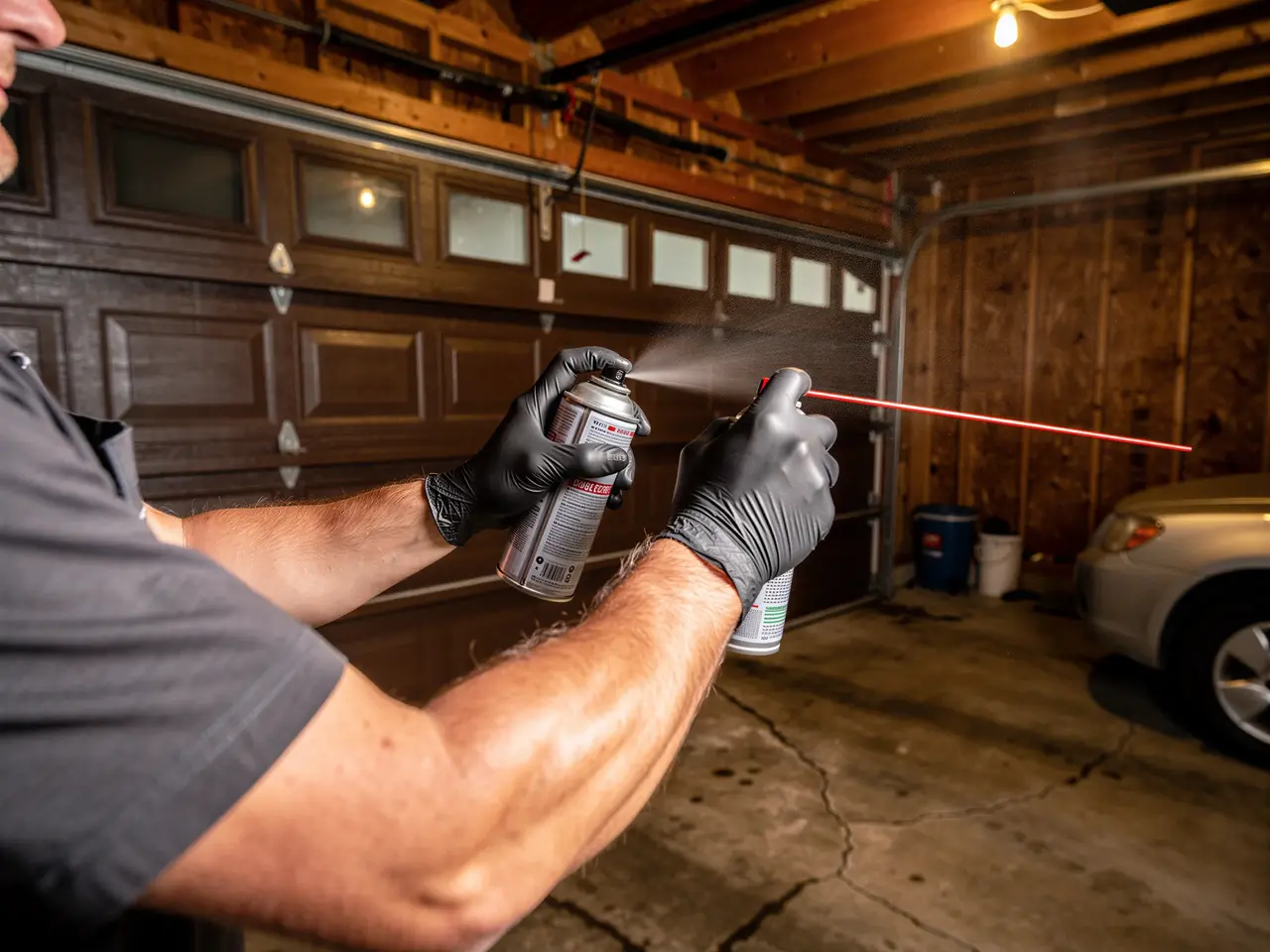
A homeowner can do real maintenance without calling anyone: wipe down the tracks, check that the rubber bottom seal isn't cracked, and run the manual release to see if the door moves smoothly by hand with the opener disconnected. If it's hard to lift or drops on its own, the springs are doing less work than they used to, and that's a call-it-in situation, not a tighten-this-bolt one.
What not to touch: the springs themselves. Extension or torsion, they're under enough stored tension to cause serious injury, and on a door from the early 1980s the hardware holding them is as old as the springs. Lubricating hinges and rollers with a garage-door-specific lubricant once or twice a year is worth doing yourself. Adjusting spring tension or replacing a cable is not - that's where the honest advice is to leave it alone and have it looked at.
Parts We Carry
For doors from this build window, the parts that come up most are extension and torsion springs sized to older door weights, replacement rollers (steel or nylon, depending on what's already on the track), and opener components compatible with chain-drive units that are still common on houses from the early 1980s rather than newer belt-drive models. Bottom seals and weatherstripping get replaced often too, since that's the part most exposed to the region's temperature swings year-round.
One limitation worth stating plainly: not every part for a door this old is something that ships overnight. Some older opener models and matching remote hardware have longer lead times than current production parts, simply because they're not made in the volume they once were. When that's the case, it's better to know before the visit than to be surprised mid-repair.
What You Are Seeing
A door that used to open in one smooth motion and now hesitates partway up, or an opener that strains and groans before the door moves - both point to springs that have lost tension gradually rather than failed outright. That gradual loss is typical of hardware pushing toward forty years old, which is exactly where a lot of Fairmount's original installs now sit given the neighborhood's 1984 median build year.
Other signs: a door that looks level standing still but visibly tilts as it travels, rollers that squeal even after lubrication, or a bottom panel with soft spots or rust blooming near the seal. None of these mean the door is done - most of it is routine wear that a maintenance visit catches and corrects before it becomes a failure that strands the car in the driveway.
Frequently asked questions
How old is the garage door hardware in most Fairmount homes likely to be?
Fairmount's housing centers on a median build year of 1984, which means a lot of original doors, openers, and springs are now pushing four decades old. Unless a door's been replaced, the hardware inside it is probably from the same era as the house itself.
Is there a local Fairmount branch for garage door service?
No. Service here is run from Chattanooga, about 10 miles away. Maintenance visits are scheduled on that route rather than staffed from a location in Fairmount itself, so booking ahead works better than expecting a same-day walk-up response.
Can I replace a garage door spring myself?
No - not safely. Whether it's an extension spring or a torsion spring, the stored tension can cause serious injury, and on hardware from the early 1980s the surrounding mounting points are as old as the spring itself. Lubrication and visual checks are fine to do yourself; spring work isn't.
Why does my opener strain more than it used to?
A motor working harder to lift the same door usually means the springs are no longer carrying their share of the weight. On a door with original 1980s-era hardware, that loss of spring tension happens gradually over years, which is why it often goes unnoticed until the opener is doing most of the lifting alone.
More garage door services in Fairmount
Book garage door service in Chattanooga
Call now or request a quote - tell us what the door is doing and where you are.