
Chattanooga, TN · Garage Door Service
Garage Door Service for Soddy-Daisy Homes
Soddy-Daisy homes built mostly after 1985 run different spring and opener hardware than older Chattanooga stock. We drive out 14 miles to fix what actually fails here.
- Repairs & new doors
- Springs & openers
- Serving 8 nearby communities
Time on the Job
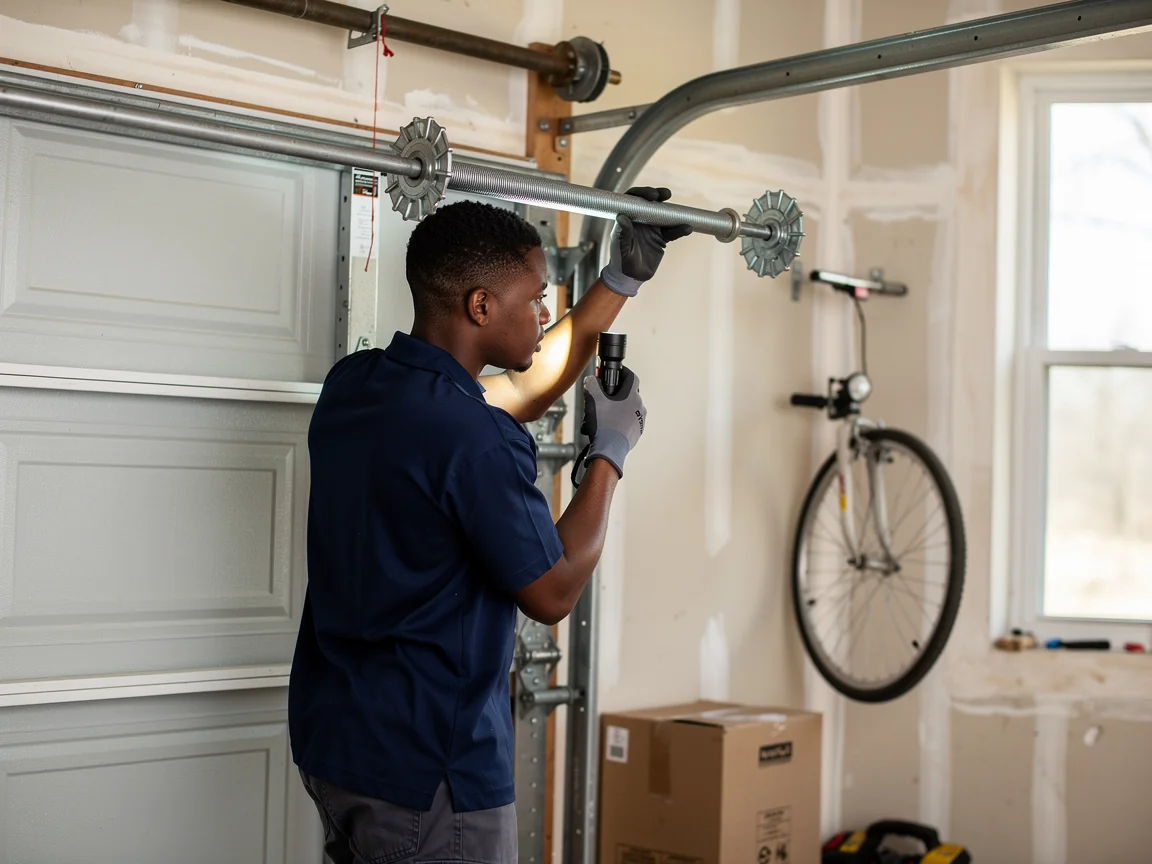
We don't keep a crew sitting in Soddy-Daisy. The truck comes out of Chattanooga, 14 miles down, and that's worth saying plainly so nobody expects a depot around the corner. What that drive buys you is a tech who's worked on more than one street's worth of doors, not a guy who only knows the model built in his own neighborhood.
The houses out here mostly went up around 1985, newer than a lot of the stock closer to the city. That one number changes what we load on the truck before we leave. A 1985 build in Soddy-Daisy is likely to have its original steel door and, depending on when it was last touched, either the factory extension springs or a torsion retrofit from a remodel. We ask about the age of the door on the phone so we're not guessing in the driveway. A repair call where we show up with the wrong spring size costs you a second trip, and we'd rather not do that to you.
What You Are Seeing
If your door is original to a mid-80s build, you're likely running a light-gauge steel panel door on either extension springs mounted above the horizontal track or an early torsion setup with a single spring. Both age out the same way: the door gets heavy to lift by hand, the opener strains and groans before it moves the door at all, or the door slams the last foot of travel instead of settling.
Openers from that era, or first-generation replacements installed in the 90s, often lack rolling-code safety and sometimes lack a working photo-eye reversal at all. If yours has no sensors near the floor on either side of the track, that's a sign the opener predates the safety standard and is worth flagging, not just living with.
Extension spring doors also show a specific failure: one spring breaks and the door tips to one side when it's halfway up, instead of refusing to move like a torsion door does. If your door goes crooked partway through its travel, that's not a track problem, it's a spring on one side doing all the work.
Doing It Yourself
A loose roller or a dragging track you can look at yourself, and tightening the bolts on a bent hinge is fair game with the door down and unplugged. What we'd ask you not to touch is the spring system, extension or torsion, full stop. An extension spring under tension that lets go doesn't fall, it whips, and we've seen what that does to a hand or a windshield.
If your door is the original 1985 steel panel and the bottom section is rusted through or the panels are visibly bowed, that's also past the DIY line, because a door that flexes under its own weight isn't a cosmetic problem, it's a structural one that puts more load on the spring and opener than they were built for.
What you can reasonably do yourself: vacuum out the track, check that the door is balanced by disconnecting the opener and lifting by hand (it should hold at waist height on its own), and listen for the specific noise your door makes before it fails so you can describe it to us on the phone.
How We Fix It
On an extension spring door from this era, we usually convert to torsion if the header has room for it, because torsion hardware is the parts stocked today and extension spring sets for 80s-era doors are getting harder to match. If the door itself is sound, that's a half-day fix, not a full replacement.
If the opener is the original or an early-90s swap, we replace it with a current unit that has working photo-eye reversal and a manual disconnect, since that's the part of an old opener that actually puts people at risk, not just the part that makes noise.
We won't push a full door replacement on a 1985 steel door that's still square and rust-free just because it's forty years old. If the panels are straight and the hardware is serviceable, we fix the spring and opener and leave the door alone. Replacement makes sense when the bottom panel is rusted through or the door won't hold alignment no matter how many times we true up the track.
What Causes It Around Here
This area sits in a cold-moderate climate band, which means steel doors and their hardware go through real freeze-thaw swings every winter rather than a steady cold. That cycling is hard on spring steel specifically: a torsion or extension spring that's fine in October can snap on the first hard cold morning in January because the metal's already fatigued from a season of expansion and contraction.
It also means galvanized hardware on an original 1985 door has had close to forty years of that cycling, which is a long run for any coil spring. We see more springs fail here in the first genuinely cold stretch of the year than in mid-summer, and that's consistent with the climate band, not a coincidence tied to any one street.
Humidity swings in the same band also work on unsealed wood jambs where the door track mounts, which loosens the lag screws holding the track to the frame over time. If your track rattles more than it used to, check those screws before you assume the track itself is bent.
Frequently asked questions
How far out is Soddy-Daisy from your shop
About 14 miles from Chattanooga. We don't keep a crew stationed in Soddy-Daisy, the truck drives out for every call, so when you phone in, tell us the make and age of your door if you know it so we bring the right spring and opener parts the first trip.
My door is from 1985, is it worth replacing or repairing
Depends on the panel, not the age by itself. If the steel is straight and not rusted through, we'll usually convert the spring system and swap the opener rather than replace the whole door. We only recommend full replacement when the panels are bowed or rusted at the bottom section.
Why did my spring snap in the cold
This area runs a cold-moderate climate with real freeze-thaw swings each winter, and that cycling fatigues spring steel faster than a steady climate would. Springs on older doors, especially ones original to an 80s build, tend to go in the first hard cold stretch of the year rather than mid-summer.
Is it safe to keep using my original 1985 opener
If it has no photo-eye sensors near the floor on either side of the track, it likely predates the current safety reversal standard. That's worth fixing regardless of how well the opener otherwise runs, since the sensors are what stop the door if something or someone is underneath it.
More garage door services in Soddy Daisy
Book garage door service in Chattanooga
Call now or request a quote - tell us what the door is doing and where you are.