
Chattanooga, TN · Garage Door Service
Garage Door Repair for Red Bank's 1963-Era Houses
Red Bank's houses date to about 1963, older than the area norm. We cover original springs, worn rollers, and tracks on this town's early-60s builds from our Chattanooga shop.
- Repairs & new doors
- Springs & openers
- Serving 8 nearby communities
Doing It Yourself
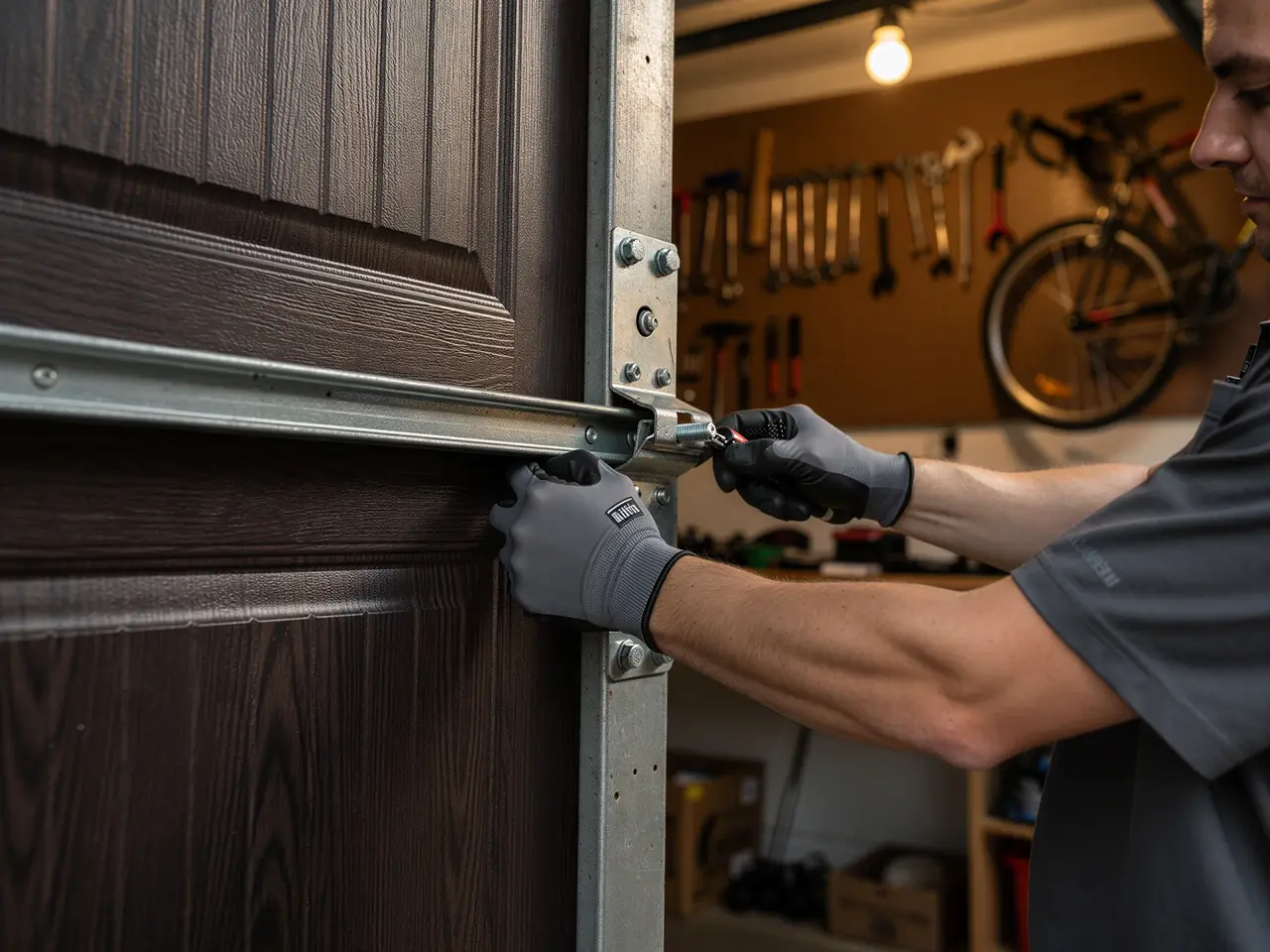
A loose roller or a track that's knocked an inch out of true, you can usually handle with a socket wrench and a level, if the door is still rolling and nothing's under tension. What you should not touch is the torsion spring. On a house built around 1963, which is most of Red Bank, that spring has had six decades to fatigue, and a spring that old can let go with enough force to break a hand or worse. Same goes for the cables running to the bottom bracket - if one strand is frayed, the whole assembly needs replacing, not a patch job.
We'll also say plainly: if your opener is original to a 1963 build, it's not worth repairing. Parts for openers that old stopped being made decades back, and chasing a working relay or gear kit for one is a losing bet. Replacement is the honest answer there, not a repair quote.
Where DIY makes sense is lubrication, tightening hinge bolts, and clearing track debris. Where it doesn't is anything holding tension or anything electrical on a door old enough that the wiring predates grounded outlets in a lot of these houses. If you're not sure which category your fix falls into, that's the call to make before you put a hand near the spring, not after.
Time on the Job
Red Bank sits about four miles from our shop in Chattanooga, close enough that we're not burning half a tank getting there. That distance matters less for how fast we show up and more for what we're used to seeing once we do - a lot of our Red Bank calls are the same early-60s hardware, back to back, which means we're not guessing at what a 1963 torsion assembly looks like when we pull the housing off.
Once we're on site, a straightforward spring or cable job is usually a single visit, start to finish. Where the job runs longer is when the opening itself has shifted over sixty years - door won't sit flush, track brackets have pulled from a jamb that's settled - and we need to true up the frame before the new hardware goes in. That's not a quick swap, and we'll tell you that up front rather than halfway through.
What You Are Seeing
In a town where the median house went up around 1963, the single most common call we get is a torsion spring that's simply outlived itself. Steel fatigues. A spring rated for a certain number of cycles when it was wound in the early '60s has long since passed that number, and it shows up as a door that won't stay up, or one that slams the last foot of travel because the spring can't carry the weight anymore.
Right behind that: original steel rollers, not the nylon ones that came standard decades later, grinding in tracks that have never been replaced. You'll hear it before you see it - a dry, metallic scrape every time the door moves. And on the oldest unconverted doors, you may still have the lift cables routed on hardware that was never updated to the safety standards that came later, which we flag even when it isn't the reason you called.
What you're less likely to see here than on a newer build is opener circuit-board failure, simply because a lot of these doors are still running manual or a replacement opener installed well after the house was built.
How We Fix It
For a spring that's failed on a house this age, we're not usually matching a part number off a sticker - the sticker's long gone or it's not a size anyone stocks anymore. We measure the door, weigh the panel, and wind a new spring to the correct cycle rating rather than trying to source an exact 1960s replacement.
Rollers and track get replaced as a set when one's worn, because a track that's been riding a grinding steel roller for years usually has its own wear pattern that a single new roller won't fix. Cables we replace in pairs, always, regardless of which side showed the fray - the other side is on the same clock.
Where the opening has settled, we shim and re-square the track to the jamb before touching the door itself. Skipping that step is how a repair looks fine for a month and then fails again in the same spot. We won't put new hardware on a frame that's still out of true.
What Causes It Around Here
Two things stack on top of each other in Red Bank. First, the age of the stock itself - a door and opener system installed around 1963 has simply run its mechanical life, independent of anything the weather did to it. Second, this is a cold-moderate climate overall, and steel springs and cables that sit through repeated winter temperature swings lose tension faster than they would in a milder band. Put a sixty-year-old spring through fifty-plus winters of that cycling and the failure isn't surprising - it's overdue.
We also see a fair number of original wood jamb-mounted tracks that have shifted slightly as the house settled over decades, which throws the door's alignment off even when the spring and cables are fine. That's a structural issue more than a hardware one, and it's common enough on 1960s-era framing that we check for it on every older-house call, not just the ones where someone mentions it.
What You Pay
We don't post a flat rate here because a spring swap and a full track rebuild aren't the same job, and quoting one price for both would be a guess dressed up as a number. What we can tell you is that in a town where median household income runs lower than the wider service area's figure, we try to be straight about what's a repair and what's throwing money at a door that's due for replacement - an opener from the original 1963 install, for instance, almost always falls in the second category.
We'll give you a number before we start, not after, and if a repair doesn't make financial sense next to replacement, we'll say so rather than patch it and see you again in six months.
Frequently asked questions
Is my garage door opener too old to fix if my house was built in 1963?
If the opener is original to the house, yes, almost certainly - parts for that era stopped being manufactured long ago. We'll check, but in most cases the honest fix is a new opener rather than chasing obsolete parts for one that's run sixty years.
How far out is Red Bank from your shop?
About four miles from our Chattanooga location. We travel to Red Bank regularly and see enough of this town's early-1960s hardware that we're not guessing at what we'll find once we're on site.
Why does my spring keep failing when it's never snapped before?
Steel fatigues with cycles, not sudden events. A spring wound in the early 1960s has gone through decades of winter temperature swings and door cycles well past its rated life. It doesn't always snap - sometimes it just quietly loses the tension to hold the door up.
Do you replace just one cable or both?
Both, always. If one side shows fraying, the other has carried the same load for the same number of years and is on the same timeline to fail. Replacing a single cable just means a second service call later.
More garage door services in Red Bank
Book garage door service in Chattanooga
Call now or request a quote - tell us what the door is doing and where you are.