
Chattanooga, TN · Garage Door Service
Garage Door Service for Harrison, TN Homes
Harrison homes mostly date to the 1960s-2000s building wave. We service torsion springs, openers, and tracks sized for that stock, out of our Chattanooga shop, 7 miles away.
- Repairs & new doors
- Springs & openers
- Serving 8 nearby communities
How We Fix It
Harrison has 3,485 households, which is a small slice of the roughly 43,198 across the whole area we cover. That matters for how a repair call plays out here: we're not working through a dense run of near-identical doors on one block like you'd get in a bigger subdivision. We're usually looking at one house, one door, and whatever setup went in when that section of Harrison was built.
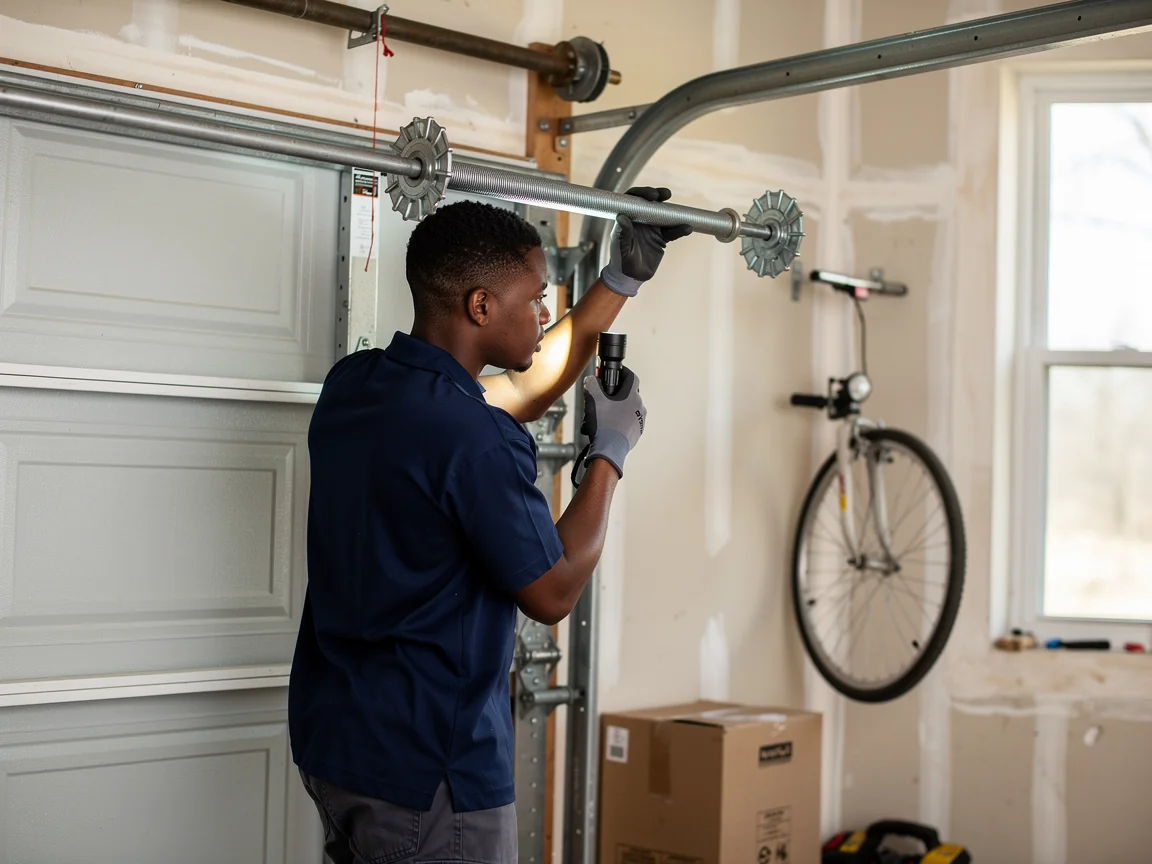
Most of the housing stock across the broader area went up between 1963 and 2004, and Harrison's own median lands right at 1979. That's a door that's likely on its second opener and maybe its second spring set already. We start every call the same way: cycle the door, check travel and balance, listen for where the noise or drag actually is, then open the panel or opener housing. A door built in 1979 and never touched since usually needs new springs and rollers before it needs a new opener - the sheet metal tends to outlast the moving parts.
We come out from our Chattanooga shop, about 7 miles from Harrison, so the diagnosis and the fix happen in the same visit. We don't carry every spring size on the truck for every stop, but we stock what covers the common torsion sizes from that building era.
What You Pay
We're not going to quote a number here that we can't back up, and nothing in what we've confirmed for Harrison lets us state a flat price. What we can tell you is what drives the cost: spring replacement is priced by spring size and door weight, not by a flat rate, and a double door built with the heavier steel common in the 1970s and 80s costs more in parts than a lighter modern panel door.
Harrison's median household income runs $89,753, noticeably higher than the $66,814 median across the rest of the service area. In practice that shows up less in what a basic spring job costs - torsion springs cost what torsion springs cost regardless of the street - and more in what homeowners choose when a door is old enough that repair and replacement are both on the table. We see more full-door replacements requested here instead of patch repairs, because the budget for it is there.
We'll always give you the actual number for your door before we touch anything, based on the spring size, the opener model, and whether the track or cables need work too.
Where This Job Goes Sideways
The thing that turns a simple spring swap into a longer job in Harrison is the opener. A door from the 1979 era usually isn't on its original opener - it's on a replacement installed sometime in the 1990s or 2000s, often with a rail and logic board that doesn't match current safety sensor standards. When we're there for a spring and find an opener with no working auto-reverse sensors, we have to flag it, because that's a safety issue we won't leave as-is.
The other place it goes sideways is track alignment on older steel doors. Decades of settling on a frame built in the 70s or 80s can leave the track just slightly out of plumb - not enough to notice day to day, but enough that a fresh spring puts uneven tension on a door that was already working around a bent track. We check alignment before we call a job finished, not after a callback.
Winters here fall in the cold-moderate band - real cold snaps, but not the kind that snap cables outright. What it does instead is stiffen old grease and shrink worn weatherseal, which shows up as a door that's noticeably harder to lift on the first cold morning.
Parts We Carry
For a town with housing mostly dating from the 1960s through the early 2000s, the parts that get used most are torsion springs sized for the heavier old steel sectional doors, standard rollers, and the lift cables that corrode first at the drum. We also carry weatherstripping and bottom seals suited to a cold-moderate climate - not insulated for deep freeze, but built to hold up through repeated freeze-thaw cycles rather than constant subzero.
What we don't carry on the truck is every obsolete opener logic board or a spring for a non-standard door width. If your door was a custom size or came with an opener brand that's since gone out of production, that part may need to be ordered, and that's the one real limitation here: we can diagnose and quote on the spot, but a specialty part can mean a second trip once it's in. We'll tell you up front if that's the case rather than let you assume it's a same-day fix.
Doing It Yourself
Lubricating hinges and rollers, tightening loose bolts on the track brackets, and replacing a worn weatherseal are all reasonable DIY jobs on a Harrison-era door. None of that requires touching the spring system.
Torsion springs are a different matter. They're wound under enough tension to cause serious injury if the winding bars slip, and on a door that's been in place since the 1970s or 80s, the hardware holding that spring in place has had decades to corrode or wear. We don't recommend DIY spring work on a door this age, and honestly we'd say the same regardless of where the door sits - it's not a Harrison-specific caution, it's just the job. If the opener itself is failing and the door still balances and moves fine by hand, that's a safer DIY lane: most standard openers are a bolt-in swap. Where we'd step in is anything involving the spring, the cables, or a door that won't hold position when disconnected from the opener - that's a sign the counterbalance is already failing and lifting it manually is a two-person, controlled job, not a one-person fix.
Frequently asked questions
Why does my garage door feel heavier in the winter?
In Harrison's cold-moderate climate, winter temperatures stiffen old grease on the springs and rollers and can shrink rubber weatherseal, both of which add resistance. If the door was already carrying a worn spring, cold weather is usually what makes the strain obvious first.
Is my opener too old to repair?
It depends on the model and whether parts are still available. Homes in Harrison built around the 1979 median are often on a second or third opener already, installed sometime after the original. If yours lacks working auto-reverse sensors, we'll recommend replacement over repair regardless of age, since that's a safety issue.
How far out is Harrison from your shop?
About 7 miles from our Chattanooga location. We come to you for diagnosis and repair; there's no separate branch in Harrison, just a short drive out.
Do you stock parts for older doors?
We carry common torsion spring sizes, rollers, cables, and weatherseal that fit the steel sectional doors typical of the 1960s-2000s building wave this area sits in. Custom widths or discontinued opener boards sometimes need to be special-ordered.
Book garage door service in Chattanooga
Call now or request a quote - tell us what the door is doing and where you are.